This week I’m researching ways that community can be brought into and also inspire art, ways in which it has been expressed through personal works and also collaborative projects. I want to explore the line between ‘art’ and ‘social enterprise’, how when an art piece becomes collaborative it may no longer feel as if it belongs in a gallery or even deserves the title of ‘artwork’ within the art world.
What are some ways to bring the community projects that I am involved in, into my work, how can I use those I am meeting through these experiences into my work ethically and how have artists previously been inspired by their local communities.
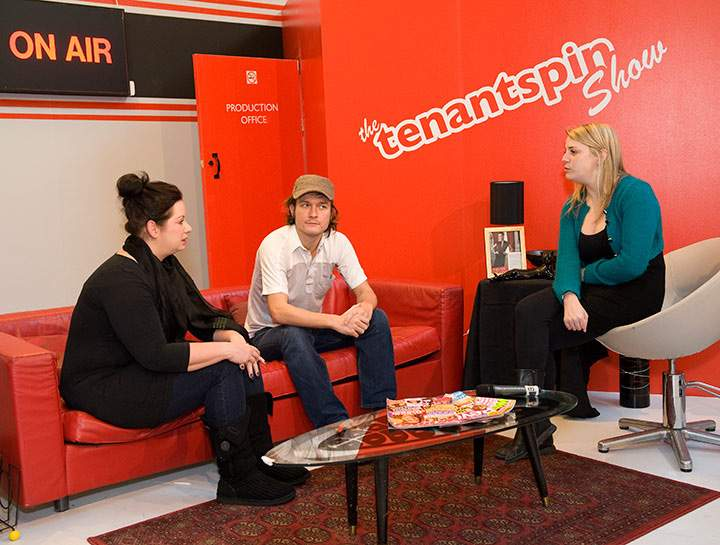
In my first blog post I am going to explore ‘social turn’ a phrase coined by Clare Bishop in her 2003 essay ‘THE SOCIAL TURN: COLLABORATION AND ITS DISCONTENTS‘. I this essay she notes ‘This mixed panorama of socially collaborative work arguably forms what avant-garde we have today: artists using social situations to produce dematerialized, antimarket, politically engaged projects that carry on the modernist call to blur art and life.’
A quote that particularly caught my eye
The emergence of criteria by which to judge social practices is not assisted by the present-day standoff between the nonbelievers (aesthetes who reject this work as marginal, misguided, and lacking artistic interest of any kind) and the believers (activists who reject aesthetic questions as synonymous with cultural hierarchy and the market). The former, at their most extreme, would condemn us to a world of irrelevant painting and sculpture, while the latter have a tendency to self-marginalize to the point of inadvertently reinforcing art’s autonomy, thereby preventing any productive rapprochement between art and life. Is there ground on which the two sides can meet?
Working closely with Ben Wilson, the co- founder and director of OsNosh, a local community project that includes a cafe serving meals using surplus food, educational workshops on how to make lost cost meals, reduce waste and grow your own produce, I am currently helping them to boost thier presence online and within funding spaces using my previous advertising knowledge. (An exercise in dispelling my guilt from my hedonistic 20s within the advertising world?) I also volunteer there on a Wednesday and Friday, working directly in the cafe and meeting the customers.
There is some kind of power struggle between my past self as an Art Director, being visually indulgent, separating the need for visual pleasure and the very real problem solving that social enterprises achieve. The quote made me reflect on this inherent separation, that yes, my advertising days had be somewhat less socially positive, however I also took with that view point the idea that my obsession and love for visual aesthetics fell into the same category.
This kind of reaction is seem throughout society, which is often assumed to be a result of lack of funding within health, care and community sectors. But could it also be that we have been conditioned to see being visually pleased, satiated and aroused as luxuries we should ignore when dealing with ‘real’ and ‘urgent’ matters.
Instead of just looking at the results of any work I produce or help to produce for OsNosh, do I also need to be looking at the visual pleasure it evokes, regardless of if this will eventually lead to any kind of funding? Would such time and effort be wasted if it doesn’t actually go towards an end goal?
When sat in a hospital room for six months at 21, I remember my mind going completely numb from the white walls. There are more and more people acknowledging the importance of aesthetics for peoples wellbeing. Our we as a society, however, still trying to show the ‘seriousness’ of the situation, through lack of focus on visual pleasure.
Still from ‘CAN YOU HEAR ME? I CAN SEE YOU’ by artist collective redock presents
A film project I am interested in that came from this work is ‘Can you hear me? I can see you?’
Artist collective Re-Dock presents – Can you hear me? I can see you! – a short, interactive exhibition of prototype communications devices developed as part of an experimental workshop and training programme.
Through activities and practical advice sessions, artist collective Re-Dock have worked with residents of Your Housing Group sheltered & supported accommodation to discuss technological innovations within their lifetimes, whilst exploring the outer limits of emerging telecommunications platforms.
The sessions have acquainted the resident groups with iPads, Skype and aspects of social media and online research tools, whilst drawing inspiration from people’s memories and experiences of the early days of electronic communications technology.
A series of prototype devices have been constructed which investigate questions such as “What message would you send to your younger self?” “Can we send a message into space?” “What are the uses of telepresence in an everyday residential setting?”
Can you hear me? I can see you! has been inspired by early theatrical techniques for creating ghostly apparitions (particularly the peppers ghost effect), 20th century versions of apparitions, teleportation and the video-phone expressed in popular sci-fi cinema (examples of which can be seen projected in the space) and the domestication of video-conferencing through products and services like Skype over the last few years.
Presented as an open sketchbook, the ideas shared in this exhibition are “in-process” with the opportunity for you to test things out.
This project has been commissioned through FACT’s Collaboration and Engagement Programme, funded by The Baring Foundation.
A work that explores the use of digital communications within residential homes, the art itself is the experimentation by the residents themselves again blurring the lines between social enterprise and art and audience and participant.
Something that comes to mind during this research are the people I met being a patient in hospitals during my 20s, we were small collectives within one room, all with our different issues and problems but were brought together by sheer necessity. It’s making me view a ‘hospital ward’ as an art collective, we’d share stories, help each other out, entertain one another. We could have easily created something together. The idea that these spaces are already there, these people are already together and we don’t facilitate them becoming a way to create is an interesting thing I want to explore further.
Controversy
There is much room for controversy within works involving social projects. To explore the extreme end of this I looked into Santiago Sierra’s work. Which all purposefully exploit people for his art to draw attention to the fact that the people involved were already being exploited, it was just hidden from society.
 Rae Eliza Digital
Leave a comment