
As a break from research paper writing I visited the Mander Family house- Wightwick Manor. The Mander Brothers became the number one manufacturers of varnishes, paints and later printing inks in the British Empire in the 19th century. The family were progressive social reformers, instrumental in establishing institutions like free libraries and art schools, and actively campaigned for causes like women’s suffrage and legal reform.
They were incredibly interested in Victorian art and design, which was evident across the home. They also are associated with Pre-Raphaelite art works despite the fact the collection only began in 1937. Seeing these paintings up close, along with their collections of portraits, illustrations, ceramics, William Morris papers, book art and sketches was incredibly inspiring. The whole house was an ode to art and creativity, much of it created by the family themselves.

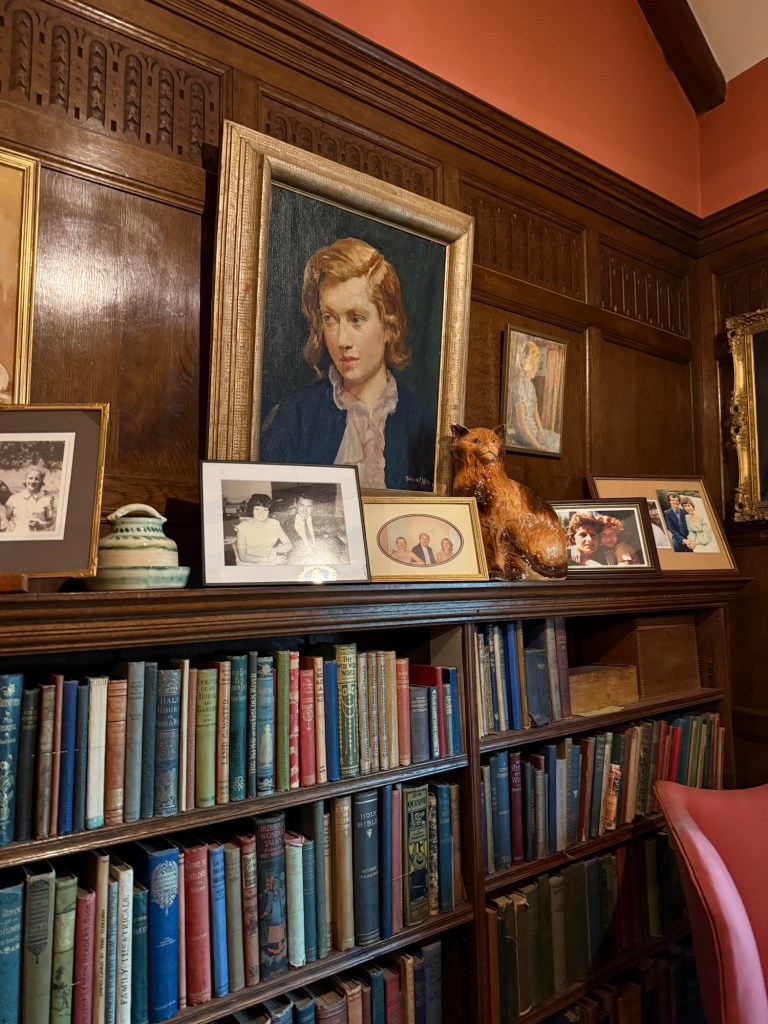
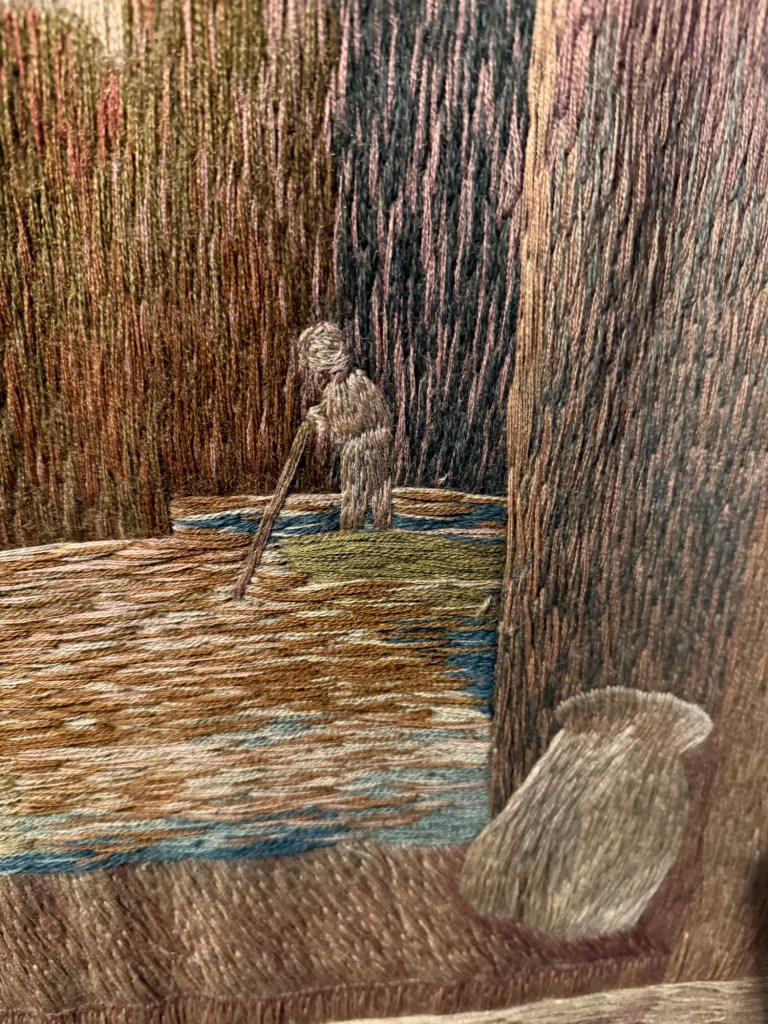
I felt slightly reluctant to take photos of all my favourite Pre Raphaelite paintings as there were so many and taking a phone out in those rooms at times felt like I was breaking the experience. But here is one below ‘Love among the Ruins’ by Edward Burne-Jones (1833–1898) which was produced in watercolour in the 1870s and again in oil (the one below) in 1890. It marks the ‘last great flowering of the pre- Raphaelite style’

It’s based on the poem ‘Love among the Ruins’ by Robert Browning. The last three stanzas, after setting the scene of a man walking across a grassy landscape where an ancient city once was, goes on to talk of heading towards the woman he loves and wondering why people put so much effort into power and greed, when we have love:
And I know, while thus the quiet-coloured eve
Smiles to leave
To their folding, all our many-tinkling fleece
In such peace,
And the slopes and rills in undistinguished grey
Melt away—
That a girl with eager eyes and yellow hair
Waits me there
In the turret whence the charioteers caught soul
For the goal,
When the king looked, where she looks now, breathless, dumb
Till I come.
But he looked upon the city, every side,
Far and wide,
All the mountains topped with temples, all the glades’
Colonnades,
All the causeys, bridges, aqueducts,—and then
All the men!
When I do come, she will speak not, she will stand,
Either hand
On my shoulder, give her eyes the first embrace
Of my face,
Ere we rush, ere we extinguish sight and speech
Each on each.
In one year they sent a million fighters forth
South and North,
And they built their gods a brazen pillar high
As the sky,
Yet reserved a thousand chariots in full force—
Gold, of course.
O heart! oh blood that freezes, blood that burns!
Earth’s returns
For whole centuries of folly, noise and sin!
Shut them in,
With their triumphs and their glories and the rest!
Love is best.
In many of the rooms they had text above or near the bed, almost like scripture or a spell for sleep. This one below was my favourite, a quote from Shakespeare’s Macbeth, Act 2, Scene 2, where Macbeth laments that he has murdered sleep after killing King Duncan.

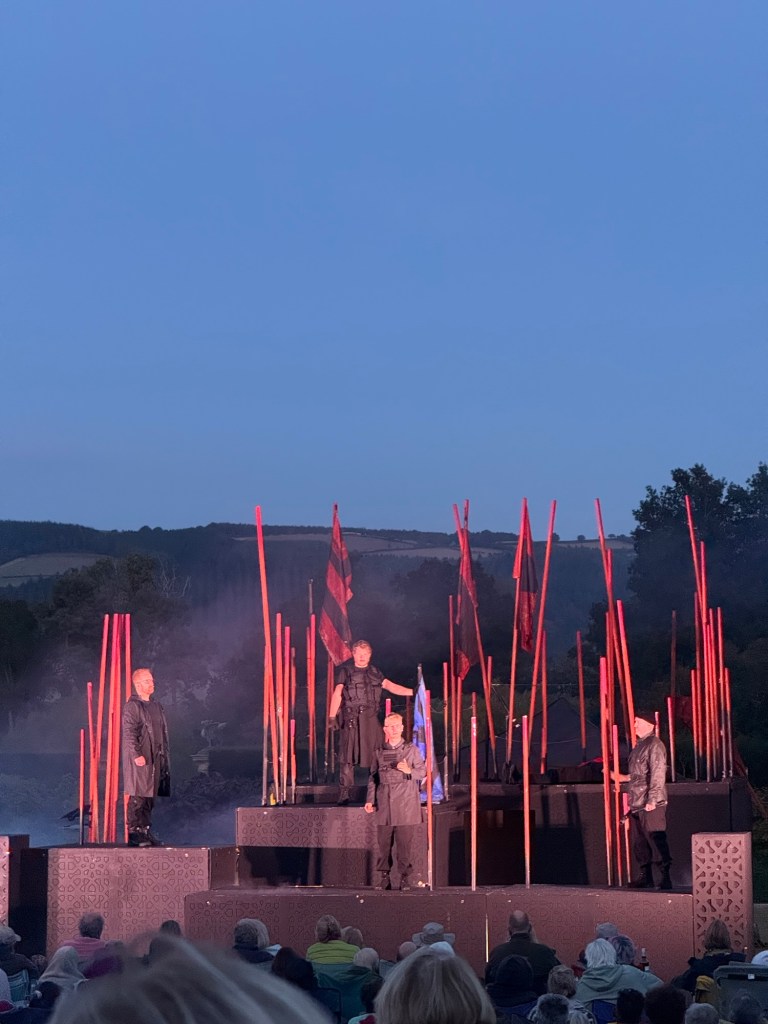
I went to see Macbeth with my sister at Powys Castle in the summer and remember it well

I loved this coloured chalk illustration of Mary Elizabeth Madox Rosetti (1885) by Ford Madox Brown, (1821-1893)

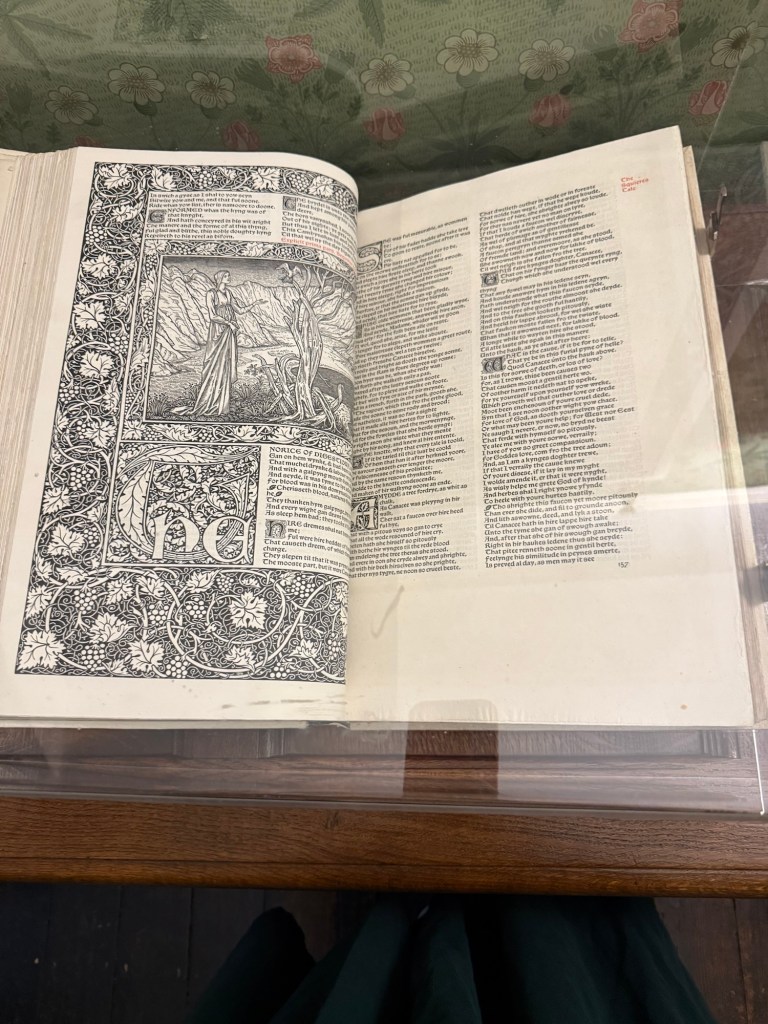
I was incredible inspired by a whole room dedicated to book publishing and production, with a specific nod to book and text illustration. I tend to swing back and forth between crude and bold drawing styles, to wanting to do something repetitive and intricate. This definitely sparked that side of me.
 Rae Eliza Digital
Leave a comment