
INPUT:
Random Thoughts Today
I wanted to write a bit on resentment, cancelling plans, being selfish, being chronically unwell. It’s beginning to effect me, as since this is my art blog, maybe I will be able to create from this very prominent feeling right now.
The core of me ‘feeling like a bad person’ always comes from my limitations of my illness. Because even though I’m fully aware I have Crohns, even though I’m fully aware that this effects my energy levels dramatically and sometimes results in pain so bad I cannot move, I still have a mirror reflecting to me that I am ‘bad’, I am ‘selfish’.
When I cancel plans, when I call out from work sick, when I don’t meet the social expectations of give and take. I used to over explain, I used to avoid, I used to cry and apologise. Therapy has taught me not to do this, to just act as I need to and people will come to you with their issues. Which they definitely do.
The creative director who ‘loved my work’ but wouldn’t hire me because I’d ‘stormed out’ of an office he’d previously worked in. I’d actually quietly left after letting people know I needed to take myself to hospital (I was in for a week). But I was an inconvinece and my lack of guilt at doing so was misinterpreted as ‘not caring’ or being selfish.
The friends who see my unequal reciprocation in relationships as selfish, they love me, they understand, but it also hurts them. If I can spend energy on this masters, or another friend, why not them.
The romantic relationships and men who thrive off ‘looking after me’ even when I don’t want them too and then tell me I ‘tricked them into caring for me’, the ones who get into the relationship knowing the entire truth and then blame me for it not being a romanticised film version of vulnerability and illness. But real, actual pain and issues I have to deal with. When they realise thier heroicism is rewarded with a sick girlfriend, and is not a miraculous cure for a chronic disease, the fairytale they have in their head collapses. Despite what society has us believe, men are just as, if not more, susceptible to fairytale. They climb the tower, kiss my sleeping body on the lips but when I do not awaken, their ego interprets that as a failure on their part, and they become angry and frustrated.
In the past I’ve subconciously made myself ‘look ill’, avoided being ‘conventionally attractive’ as I’ve been made to feel like I’m tricking men into thinking I’m well. Tricking men has always been a problem. It was my biggest fear when I had the colostomy bag, I would make sure everyone knew, so I could never be accused of luring someone into a situation they didn’t want to be in. I still feel the same, though the obvious physicality has gotten smaller, I still get made to feel like I have set a trap. When in a club or a bar, I will make myself small, avert my gaze, all because I internally have been made to feel like it’s not fair to do otherwise.
I’ve gotten tired of explaining these things with my Crohns, it’s like that’s just a given and I’ve integrated my Crohns into my personality. I’m just not good. I’m just not reliable. I’m just not okay. I’m selfish. It’s easier to think of myself that way now because my Crohns feels like a core part of me. I just apologise, I just accept that’s how people feel.
I’m so tired of saying ‘I’m sorry, I’m really struggling with my health right now’… I would rather just wave a white flag and allow people to see me in a bad light. It’s almost become the preferred option.
I’ve recently heard of two people in my situation, having Crohns Disease and just deciding to completely isolate forever. I understand them. Isolation avoids these pains, avoids the backlash that socialising results in. I will never isolate, but I don’t think I’ll ever get used to people holding a cracked mirror in my face that tells me I’m weak, selfish and not enough.
This is what comes up when you search ‘cancelling plans’ on the crohns disease reddit. Defeat is people’s best option.

Last year I was emotionally cheated on (and likely physically) with a woman who looked exactly like me, liked the same things as me and had a similar view on the world but she didn’t have crohns and she was full of energy. How sad that I was happy for him.
Songs I’m listening to today: flounder- quinnie
Film I’m watching: PJ HARVEY-A DOG CALLED MONEY
Song I’m learning on guitar
Trying a new one with a slightly harder strumming pattern
What I’m Knitting
OUTPUT:
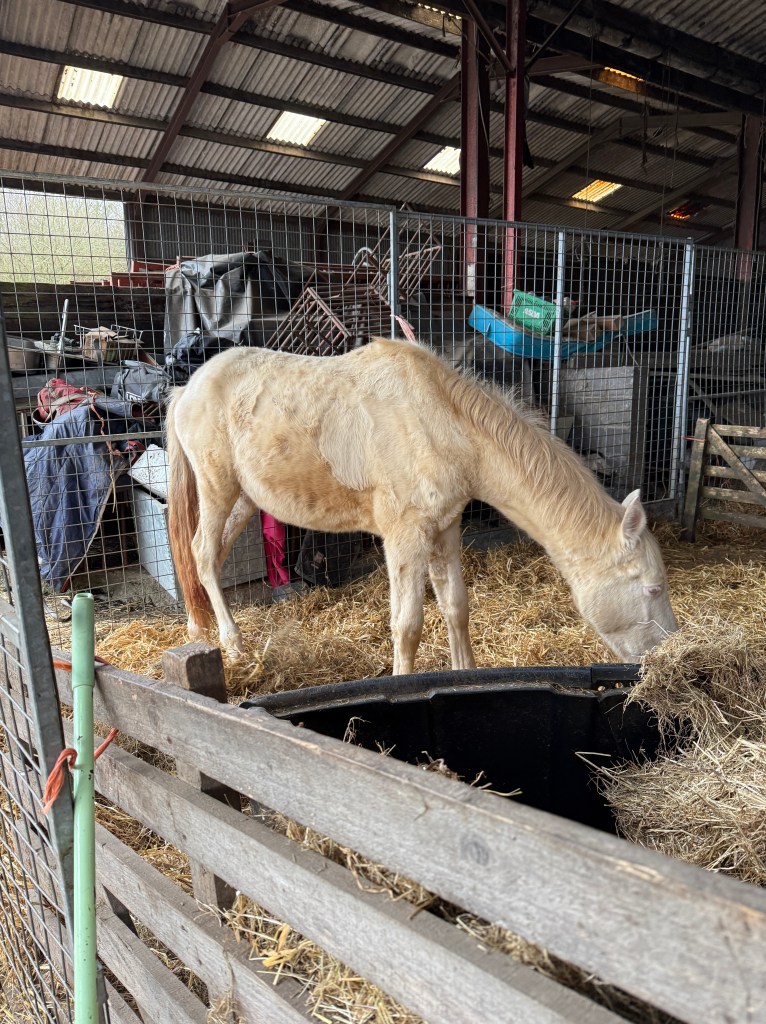
PHOTOGRAPHY FROM WALK
These are actually from yesterday, I went to my friends stables and helped her look after the horses. It absolutely exhausted me but I definitly want to do it more as it calms me and there’s something about manual labour that connects me to my body.


ARTIST BIO WRITE UP FOR ABOUT SECTION
Rachael Burkinshaw is a contemporary fine artist whose work explores themes of transformation, resilience, and personal evolution, drawing deep inspiration from nature’s cycles of growth, decay, and renewal. Her paintings reflect the tension between structure and surrender, chaos and order, destruction and regrowth—a dialogue that mirrors both her creative process and her lived experience.
For seven years, Rachael worked as a global Art Director in London, shaping visual narratives for some of the world’s most recognizable brands, including Johnnie Walker, Hendrick’s Gin, Adidas, and Strongbow. She lived in Hampstead, a neighborhood long associated with artists and writers, absorbing the creative pulse of the city while working on global campaigns and rebrands. But the relentless pace of London, coupled with personal health challenges, led to an unexpected transition: a move to Llanymynech, Wales. What at first felt like displacement soon became a catalyst for healing. The contrast between London’s intensity and the organic stillness of the Welsh landscape reshaped not only her physical well-being but also her artistic approach. Now, her work reflects the deep, unseen forces that shape both human lives and the natural world—growth through adversity, the resilience of organic forms, and the quiet power of change over time.
Living with Crohn’s disease and undergoing multiple major surgeries, Rachael has developed a profound relationship with endurance, adaptation, and the body’s connection to the environment. Rather than depicting illness directly, she channels these experiences into organic movement, layered luminosity, and recurring motifs of spirals, roots, and geological formations—symbols that speak to both the human condition and the larger rhythms of nature.
Now pursuing her Master’s in Fine Art at Central Saint Martins, Rachael integrates the spiritual and emotional dimensions of abstraction with a deep awareness of nature’s quiet resilience and impermanence. Her current body of work examines the artistic process itself as an act of perseverance: the willingness to sit with discomfort, trust the unknown, and push beyond the limits of the familiar—just as nature does, endlessly adapting and evolving.
CURRENT PIECE
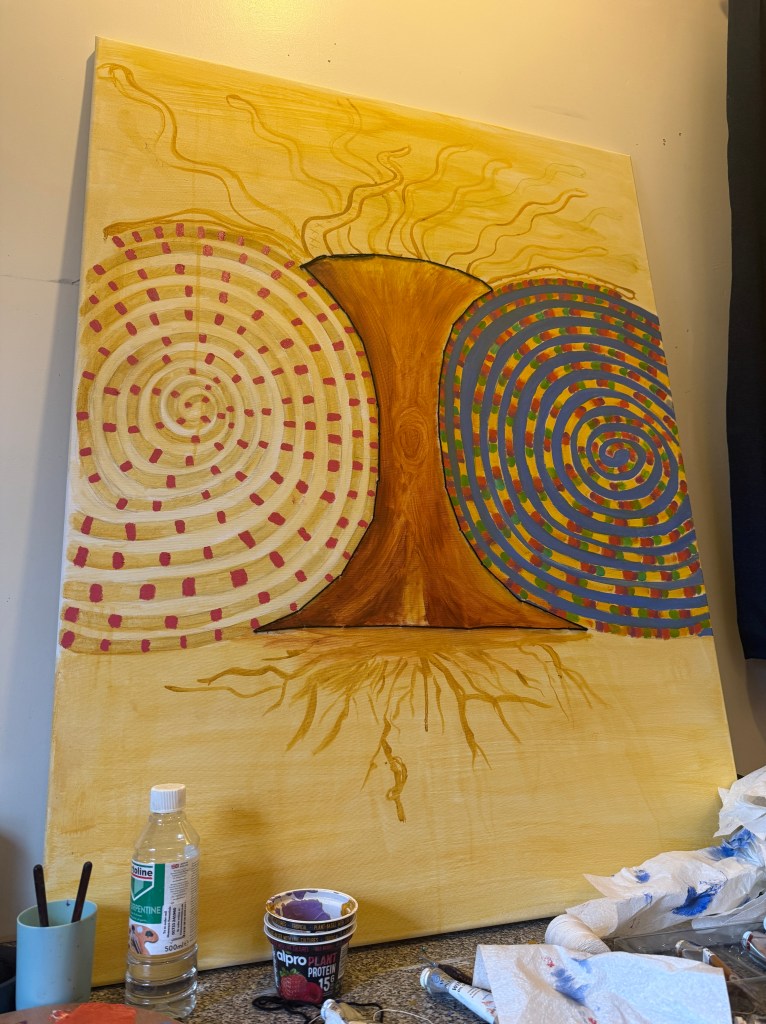
Perfecting composition with projection
I drew a rough outline on procreate of how I want the snakes to sit on top of the trunk and then projected it over the painting.


NEXT PIECE INSPIRATION
Moodboard of these symbols
Along with the works of Hilma Klint and taking inspiration from the Voynich Manuscript visually, I want to use symbolism from books such as ‘Women who run with wolves’ and the most recent text I’ve read ‘addiction to perfection’.
KEY SYMBOLS
1. The Demon Lover – Represents the inner critic, toxic perfectionism, and the pursuit of an unattainable ideal.
Healing: Recognizing its false promises and embracing imperfection.
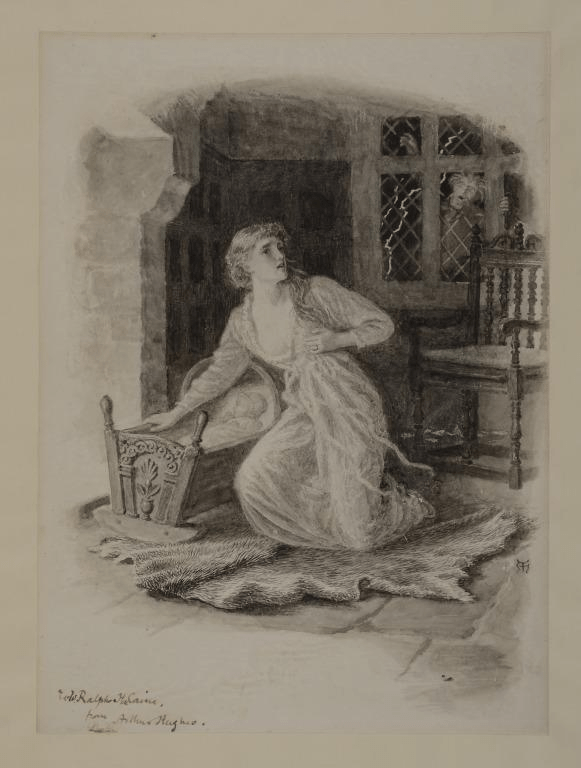
The Demon Lover
Arthur Hughes

Rama Spurns the Demon Lover
(‘Rama Spurns the Demon Lover’, 1913. )
Warwick Goble
2. The Body (The Starving Body) – Symbolizes disconnection between body and soul, manifesting in eating disorders or numbness. Healing: Reconnecting with the body’s wisdom.
3. The Hollow Woman – A woman who has lost connection to her soul and intuition in pursuit of perfection.
Healing: Reclaiming inner life and embracing imperfection.
4. The Wise Old Woman (Crone) – Represents deep feminine wisdom that comes from accepting life’s imperfections.
Healing: Learning self-trust and intuition.

Crones. © Asma Istwani
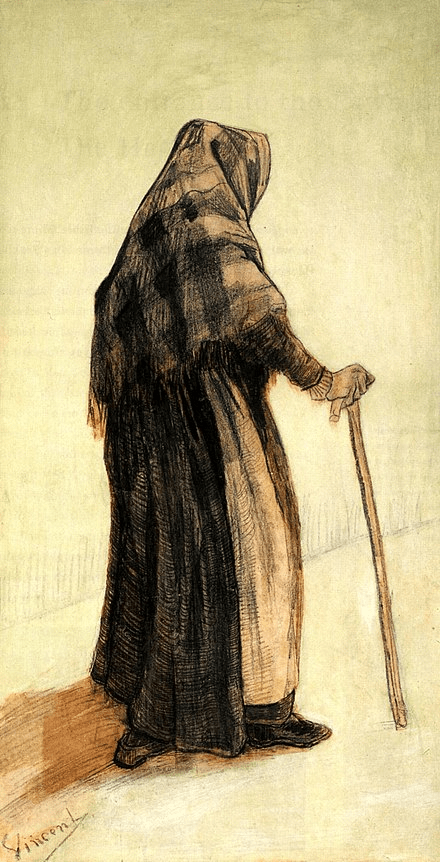
Old Woman Seen from Behind,
by Vincent van Gogh.
5. The Clockwise Spiral – Symbolizes external growth, structure, and order. Potential danger: Leading to burnout if disconnected from inner self.

6. The Counterclockwise Spiral – Represents deep inner transformation, dismantling old identities for rebirth.

7. The Chrysalis / Butterfly – Transformation from suffering to wholeness, requiring patience and surrender.

Maria Sibylla Merian, 1679
8. The Snake – Represents the body’s wisdom and feminine instinct, urging trust in intuition.


9. The Moon – A feminine symbol of intuition, cycles, and accepting change.
10. The Ocean / Water – Represents deep emotions, surrender, and the unconscious.
11. The Dark Night of the Soul – The necessary crisis before transformation, requiring faith in the process.
12. The Black Madonna – Symbolizes the rejected deep feminine power, intuition, and sensuality.


13. Fire – Represents purification, destruction, and transformation of false perfectionist ideals.
14. The Womb – A sacred space for inner gestation, emphasizing patience before external action.

15. The Golden Shadow – Represents repressed positive traits such as joy, creativity, and spontaneity.
16. The Voice of the Soul – The inner truth often suppressed in perfectionism.
SYMBOLS WITHIN THE TALES
1. The Handless Maiden – Represents a woman’s loss of power due to external control, requiring reclaiming her soul.
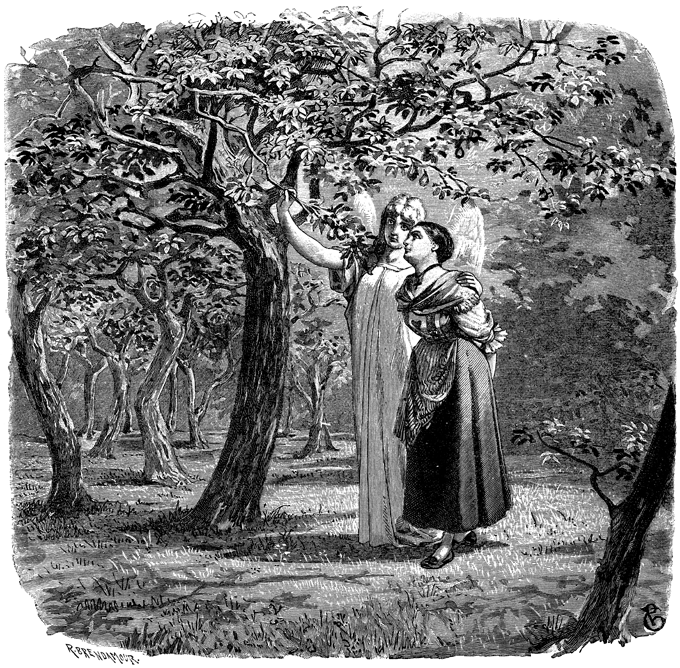
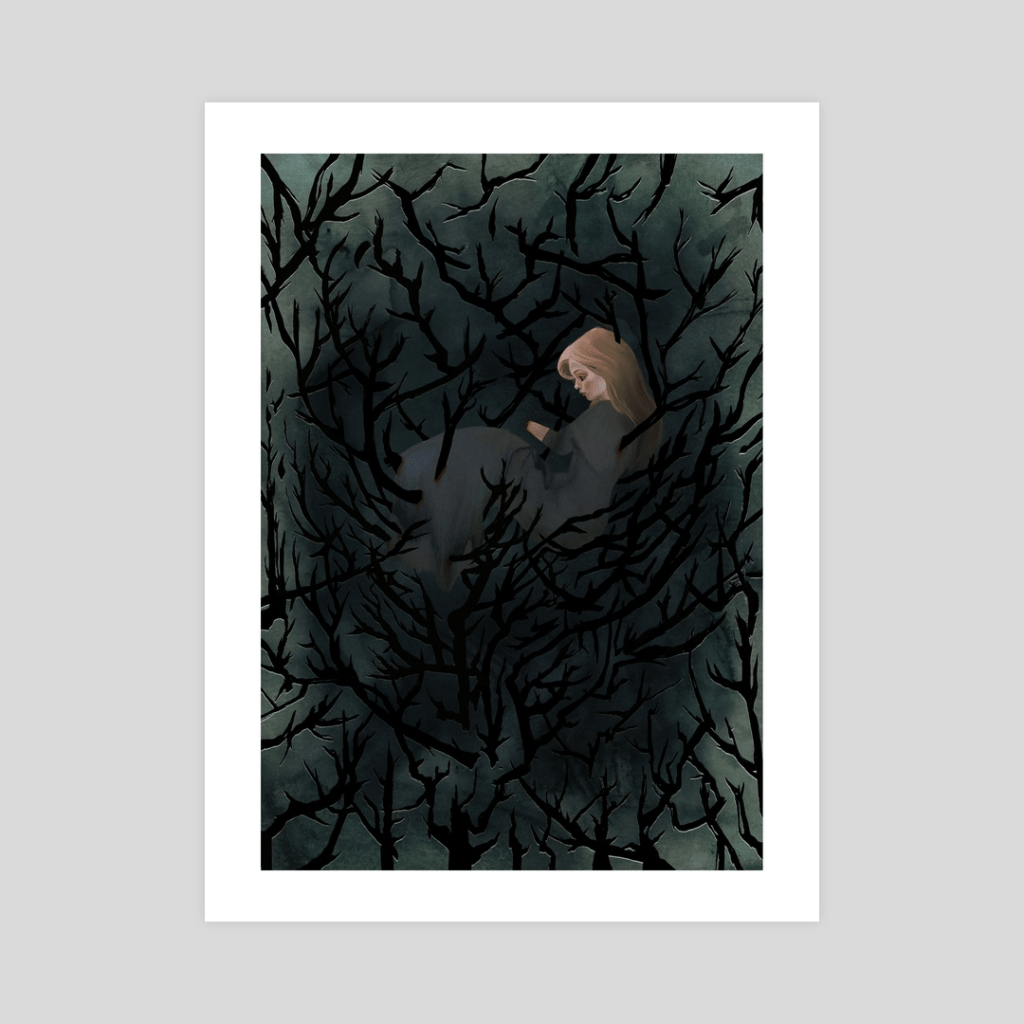
Celeste Woods
2. The Fisher King Wound – A culture’s loss of the sacred feminine, needing restoration of balance.
3. The Bridegroom Who Would Not Eat – Represents the starving soul in perfectionism, urging self-nourishment.
4. Bluebeard – Symbolizes the destructive Demon Lover who kills women’s creativity, requiring rejection of perfectionism.
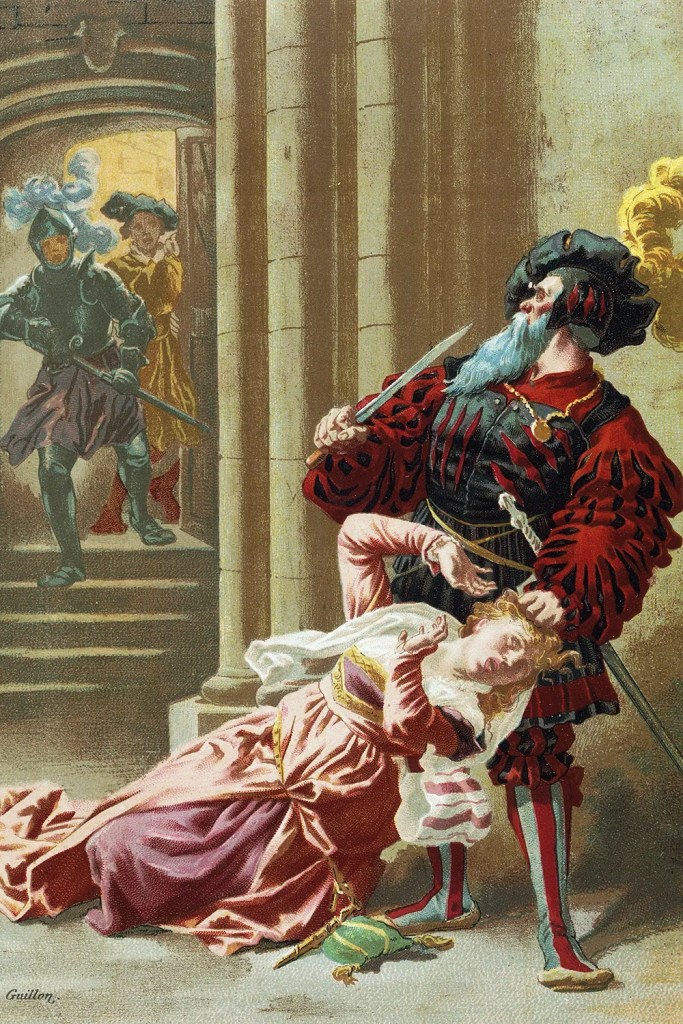
Bluebeard illustration by Guillon for an edition of the tales by Charles Perrault published in Paris in the late 19th century
5. Lady Macbeth– Used to discuss the destructive pursuit of power and perfection. She interprets Lady Macbeths actions as embodying negative aspects of the feminine psyche when it is disconnected from it’s nurturing qualities

Ellen Terry as Lady Macbeth
1889, John Singer Sargent
Each symbol represents a step in the journey from perfectionism to wholeness, urging the balance of feminine wisdom
with external achievement.
 Rae Eliza Digital
Leave a comment