INPUT:
Songs I’m listening to today: BEFORE IT MIGHT BE GONE- THE VICES
Film I’m watching: BIRD- Andrea Arnold
Books I’m reading: THE FEMININE IN FAIRYTALES

Song I’m learning on guitar
Trying a new one with a slightly harder strumming pattern
What I’m Knitting
OUTPUT:
Three Pages:
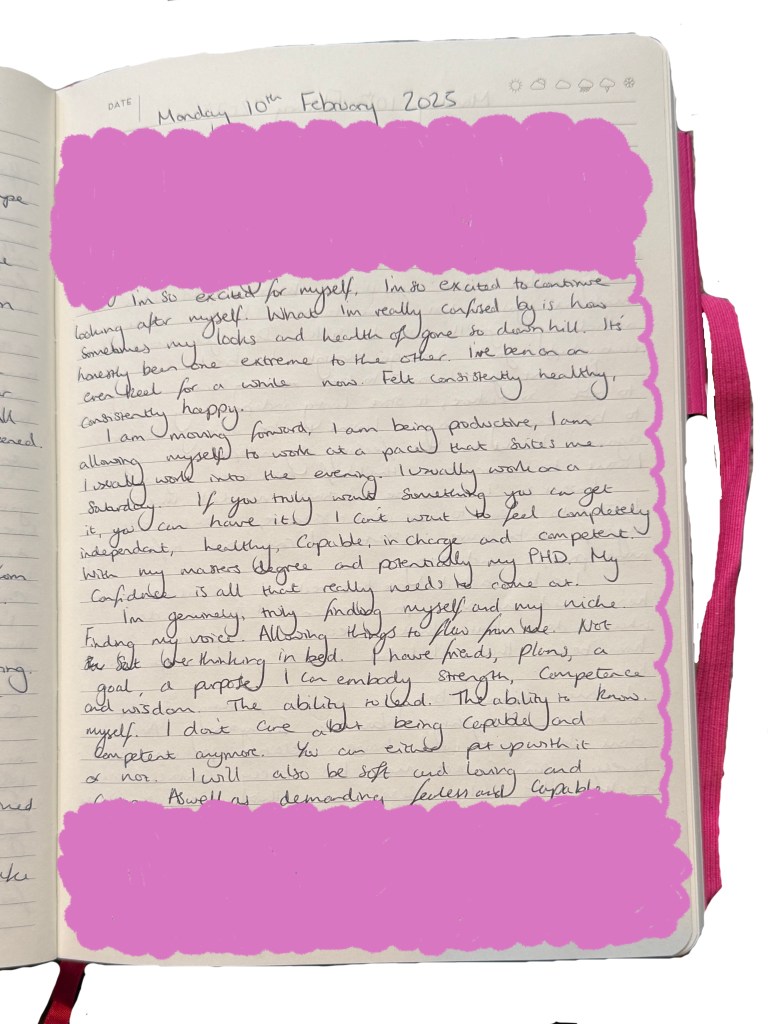
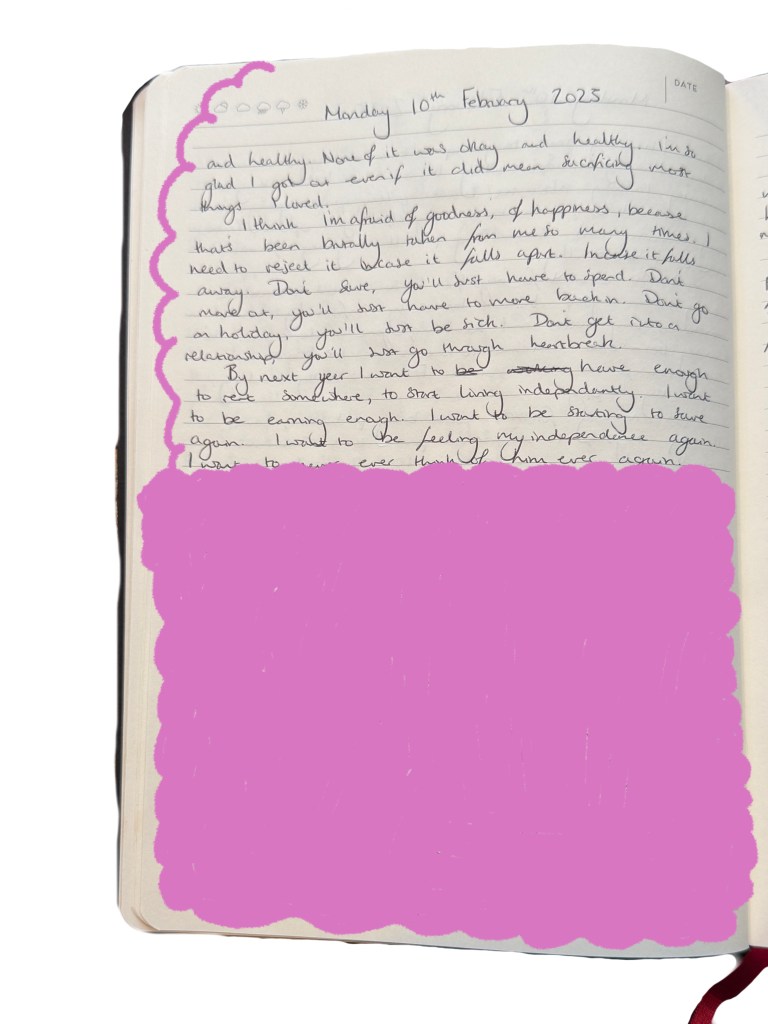
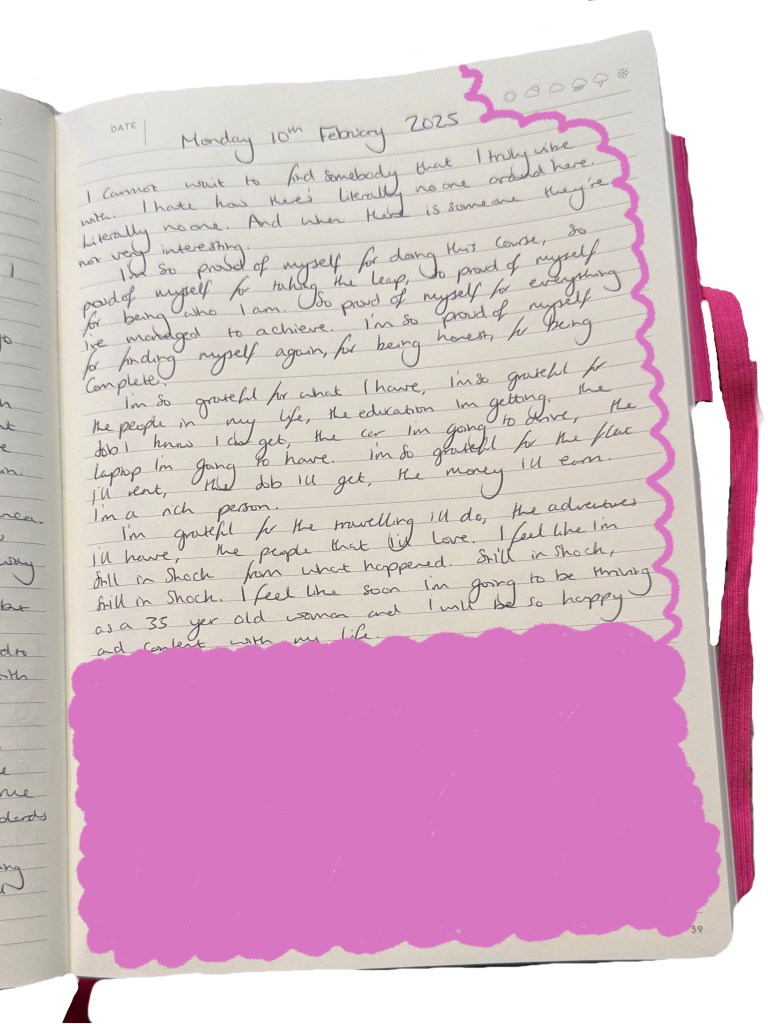
POETRY:
PHOTOGRAPHY FROM WALK








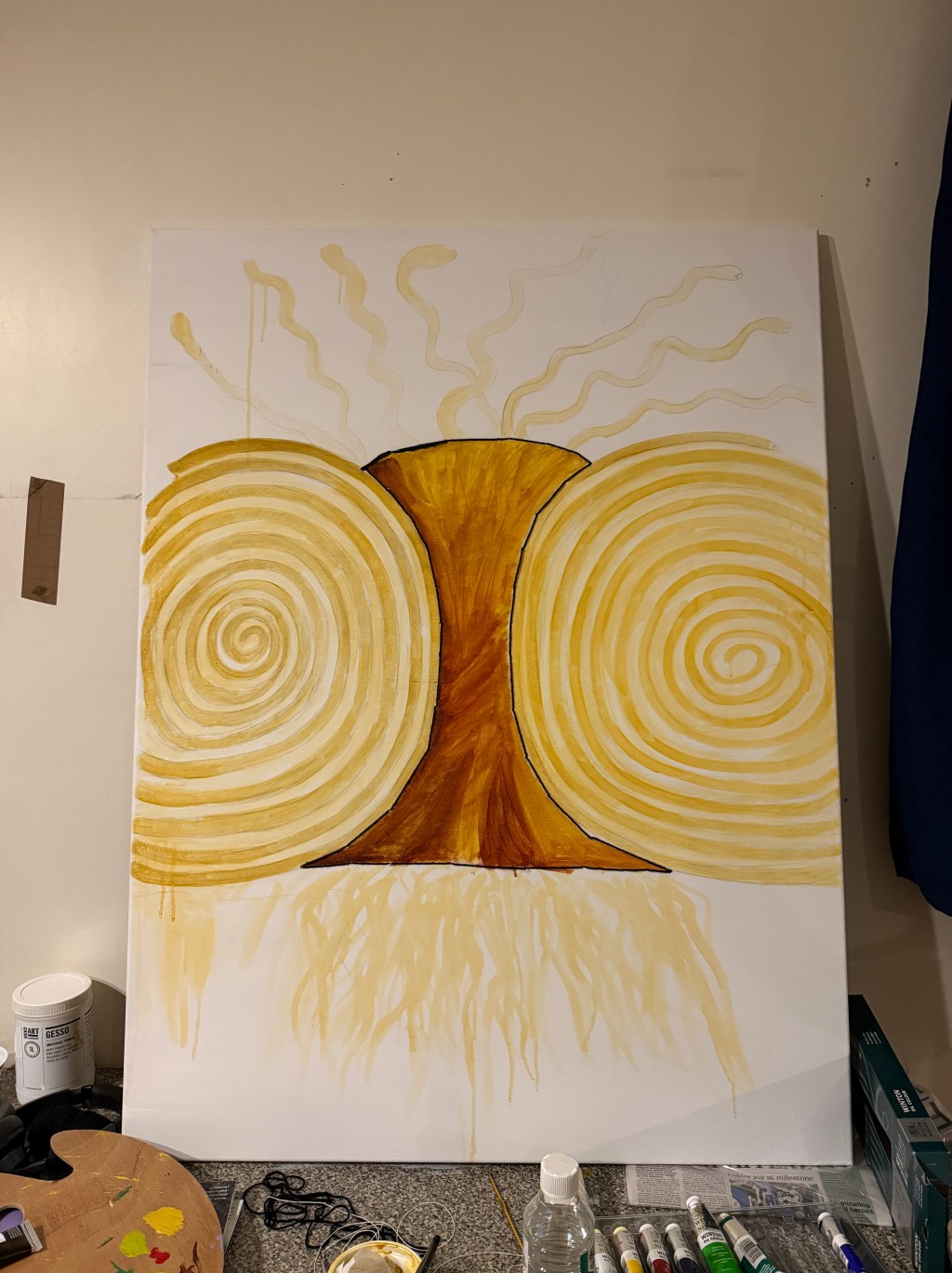
CURRENT PIECE
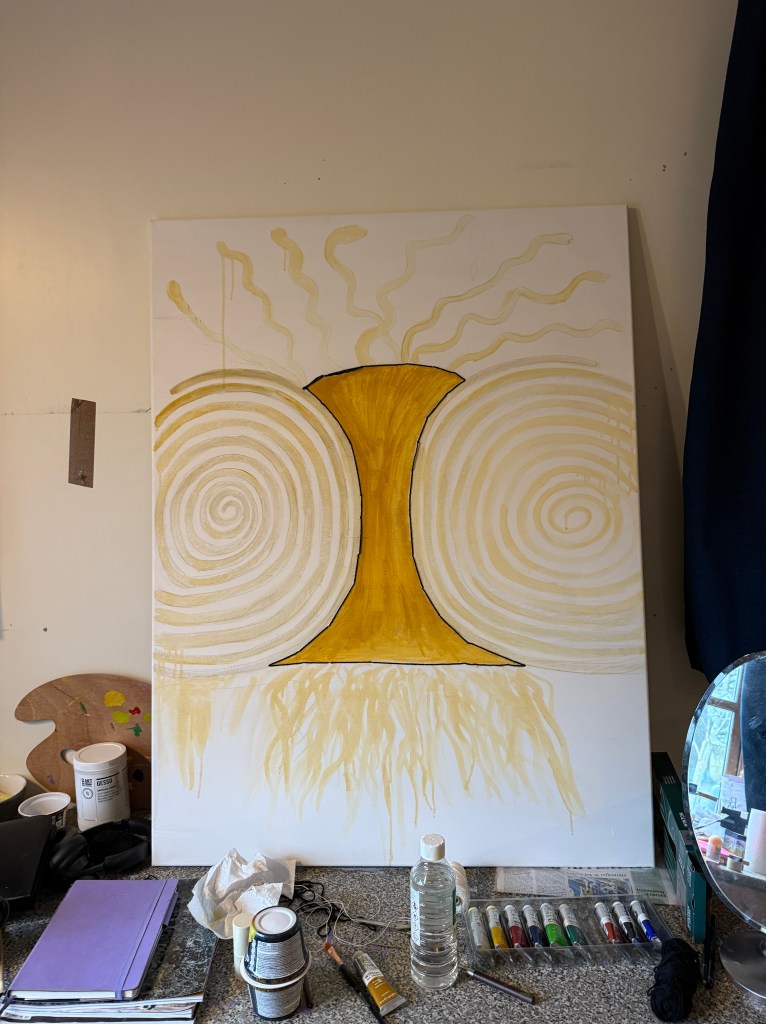
I’ve never hated anything more. lol.
Maybe trying to do something I hate will inform my digital pieces. I don’t know. Today is full of distain
MY EGO: It looks like the set from a primary school play
ME: It’s an underpainting, it’s not supposed to look good
MY EGO: Yeah but it should look good by now if it doesn’t its not worth it
ME: You’re never going to improve if you don’t try to persevere
MY EGO: My ex was right
ME: Was he right? Or was he just someone absorbed by his own ego too
MY EGO: I should just give up, I’m a fraud
ME: Nope, that’s how you never improve. It needs colour and more time.
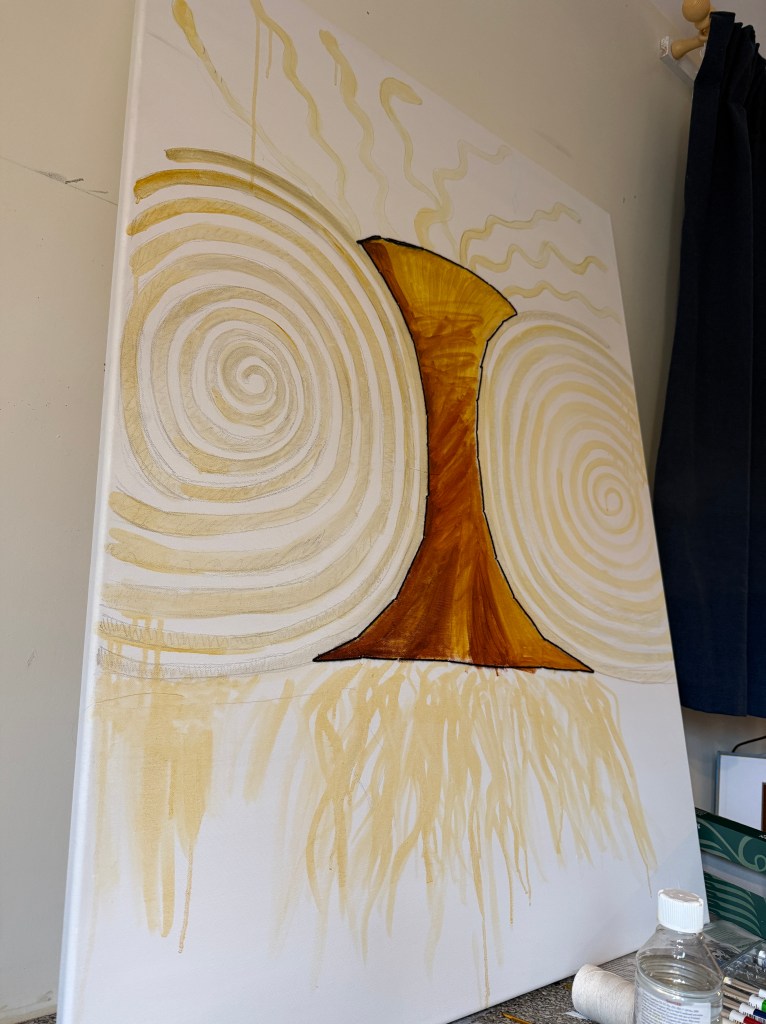
I’ve struggled a lot today, my crohns hasn’t been great which has made it hard to think positively and keep going. I have had to have a nap in the middle of the day and have negative thoughts spiralling around my head.
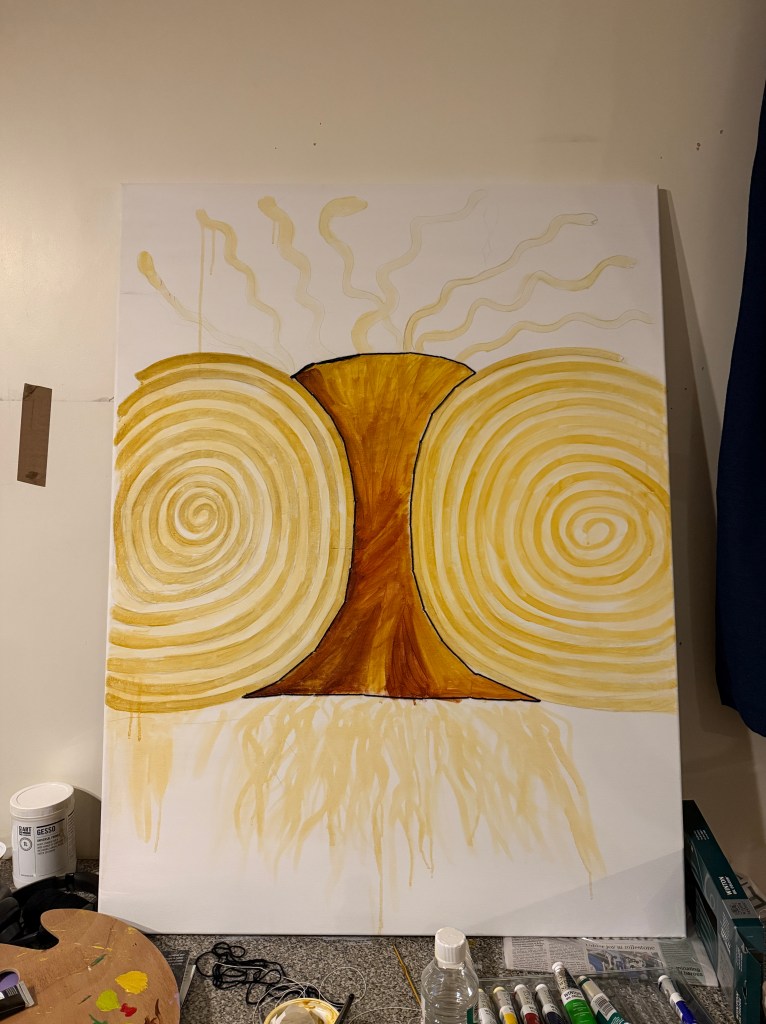
In all honesty I hate everything I’ve done today, but I also hate everything so it doesn’t really mean much. Tomorrow I’m going to go out for a walk and then I’m going to watch a film on Wednesday in the local arts centre.
My mood and my thoughts are not conducive to any kind of meaningful analysis
NEXT PIECE INSPIRATION
Moodboard of these symbols
Along with the works of Hilma Klint and taking inspiration from the Voynich Manuscript visually, I want to use symbolism from books such as ‘Women who run with wolves’ and the most recent text I’ve read ‘addiction to perfection’.
KEY SYMBOLS
1. The Demon Lover – Represents the inner critic, toxic perfectionism, and the pursuit of an unattainable ideal.
Healing: Recognizing its false promises and embracing imperfection.
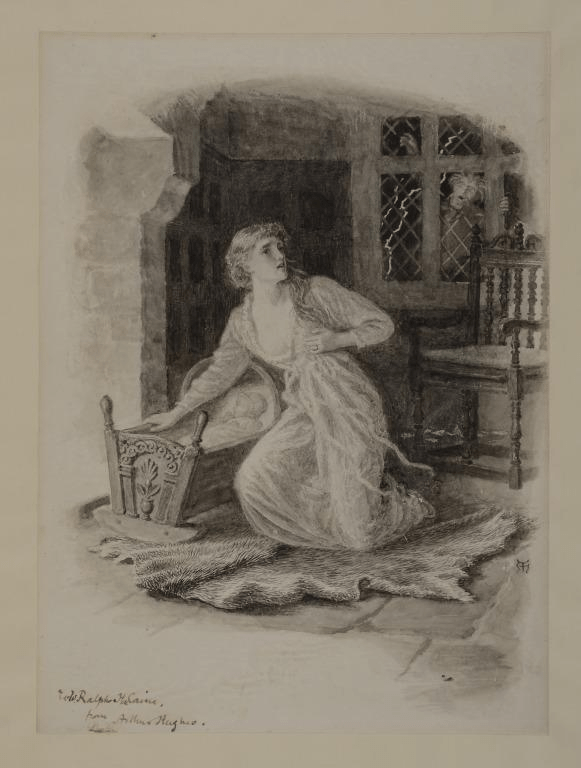
The Demon Lover
Arthur Hughes

Rama Spurns the Demon Lover
(‘Rama Spurns the Demon Lover’, 1913. )
Warwick Goble
2. The Body (The Starving Body) – Symbolizes disconnection between body and soul, manifesting in eating disorders or numbness. Healing: Reconnecting with the body’s wisdom.
3. The Hollow Woman – A woman who has lost connection to her soul and intuition in pursuit of perfection.
Healing: Reclaiming inner life and embracing imperfection.
4. The Wise Old Woman (Crone) – Represents deep feminine wisdom that comes from accepting life’s imperfections.
Healing: Learning self-trust and intuition.

Crones. © Asma Istwani
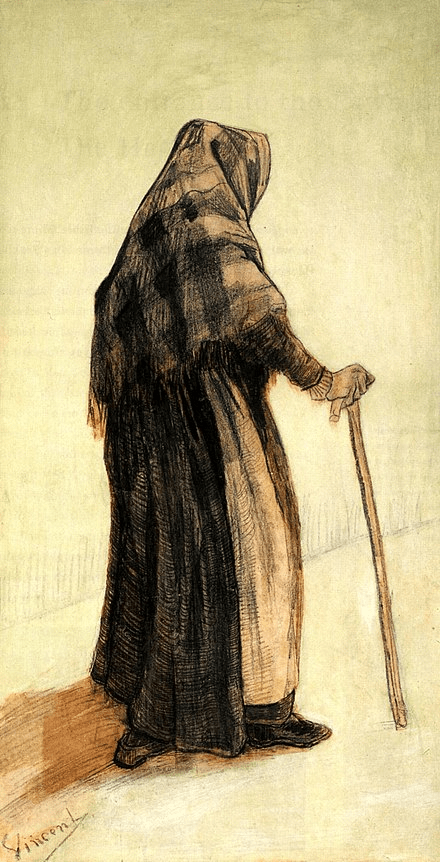
Old Woman Seen from Behind,
by Vincent van Gogh.
5. The Clockwise Spiral – Symbolizes external growth, structure, and order. Potential danger: Leading to burnout if disconnected from inner self.

6. The Counterclockwise Spiral – Represents deep inner transformation, dismantling old identities for rebirth.

7. The Chrysalis / Butterfly – Transformation from suffering to wholeness, requiring patience and surrender.

Maria Sibylla Merian, 1679
8. The Snake – Represents the body’s wisdom and feminine instinct, urging trust in intuition.


9. The Moon – A feminine symbol of intuition, cycles, and accepting change.
10. The Ocean / Water – Represents deep emotions, surrender, and the unconscious.
11. The Dark Night of the Soul – The necessary crisis before transformation, requiring faith in the process.
12. The Black Madonna – Symbolizes the rejected deep feminine power, intuition, and sensuality.


13. Fire – Represents purification, destruction, and transformation of false perfectionist ideals.
14. The Womb – A sacred space for inner gestation, emphasizing patience before external action.

15. The Golden Shadow – Represents repressed positive traits such as joy, creativity, and spontaneity.
16. The Voice of the Soul – The inner truth often suppressed in perfectionism.
SYMBOLS WITHIN THE TALES
1. The Handless Maiden – Represents a woman’s loss of power due to external control, requiring reclaiming her soul.
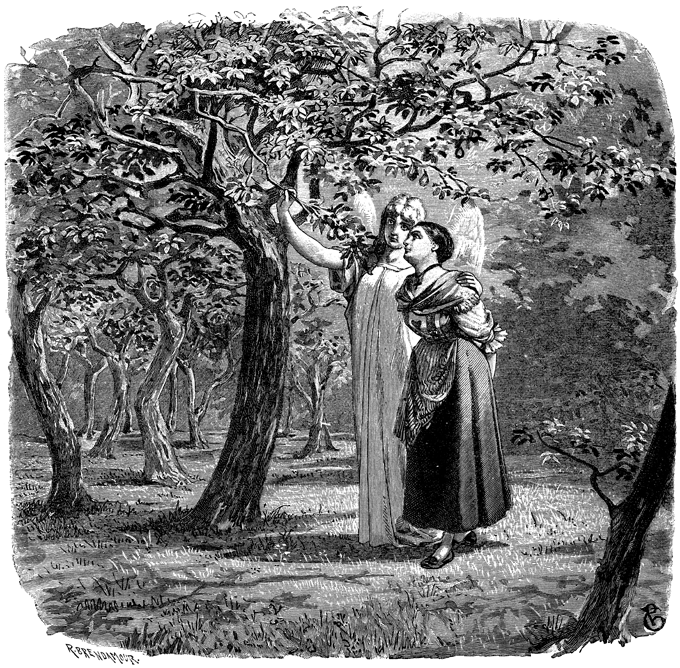
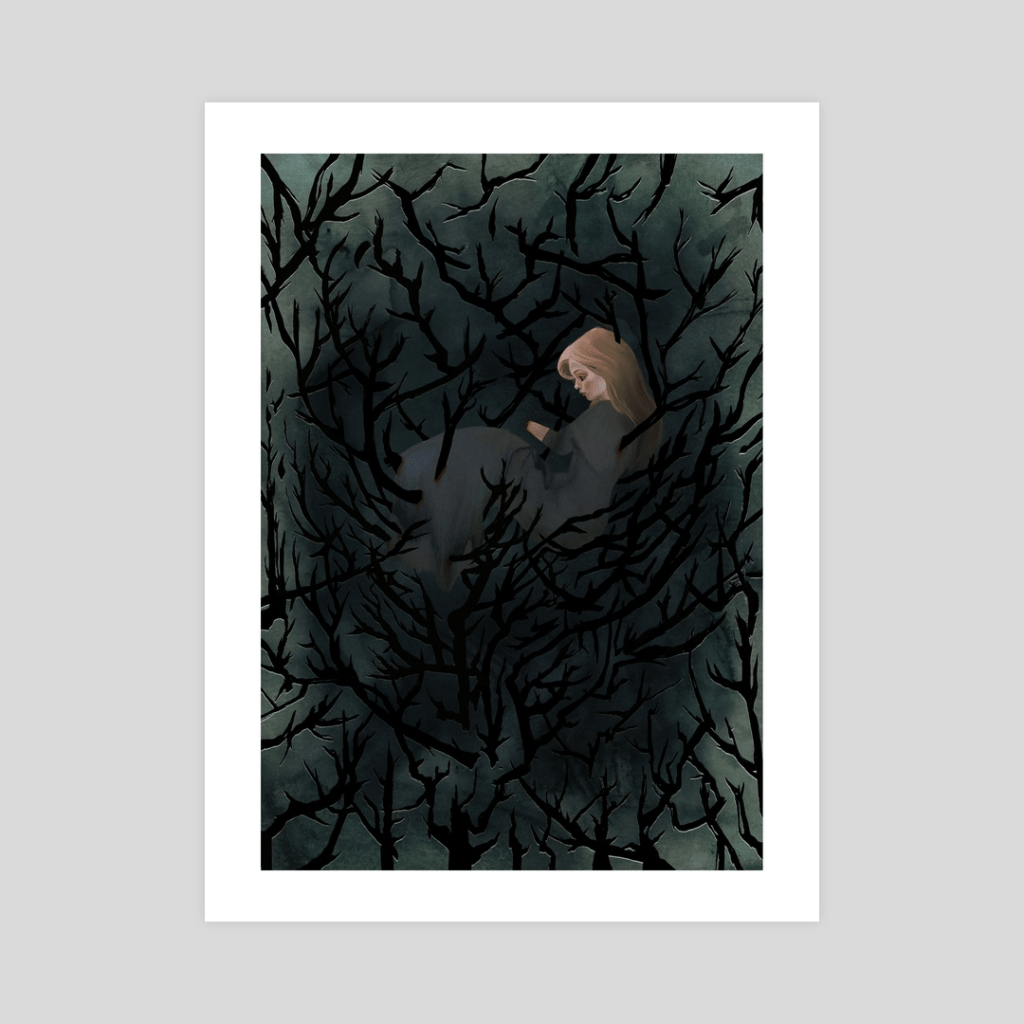
Celeste Woods
2. The Fisher King Wound – A culture’s loss of the sacred feminine, needing restoration of balance.
3. The Bridegroom Who Would Not Eat – Represents the starving soul in perfectionism, urging self-nourishment.
4. Bluebeard – Symbolizes the destructive Demon Lover who kills women’s creativity, requiring rejection of perfectionism.
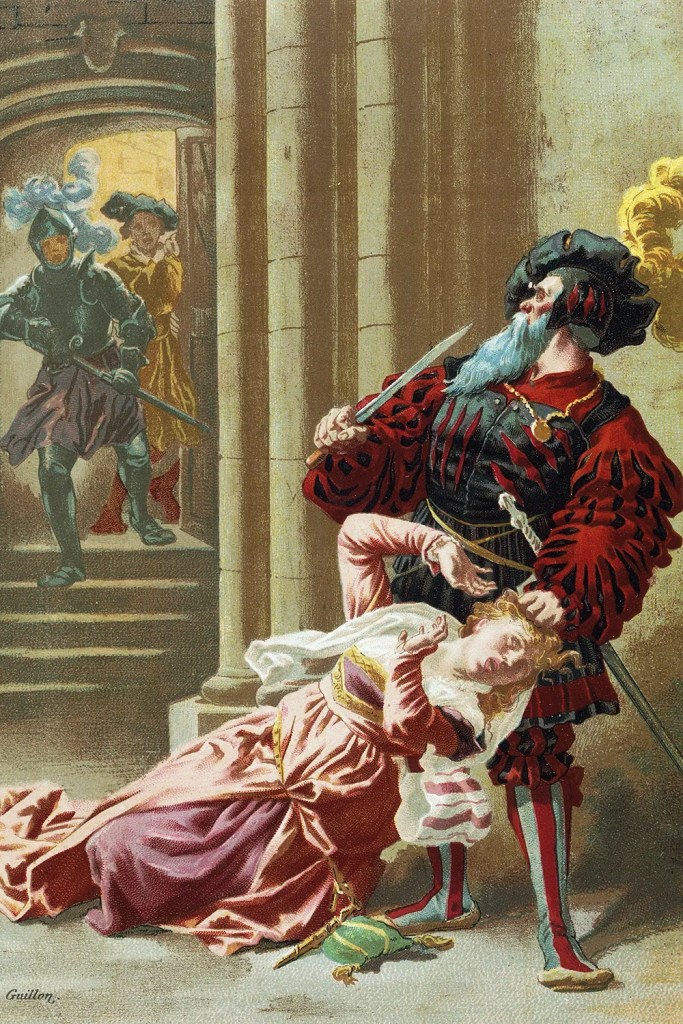
Bluebeard illustration by Guillon for an edition of the tales by Charles Perrault published in Paris in the late 19th century
5. Lady Macbeth– Used to discuss the destructive pursuit of power and perfection. She interprets Lady Macbeths actions as embodying negative aspects of the feminine psyche when it is disconnected from it’s nurturing qualities

Ellen Terry as Lady Macbeth
1889, John Singer Sargent
Each symbol represents a step in the journey from perfectionism to wholeness, urging the balance of feminine wisdom
with external achievement.
 Rae Eliza Digital
Leave a comment